By: Alex Barrones
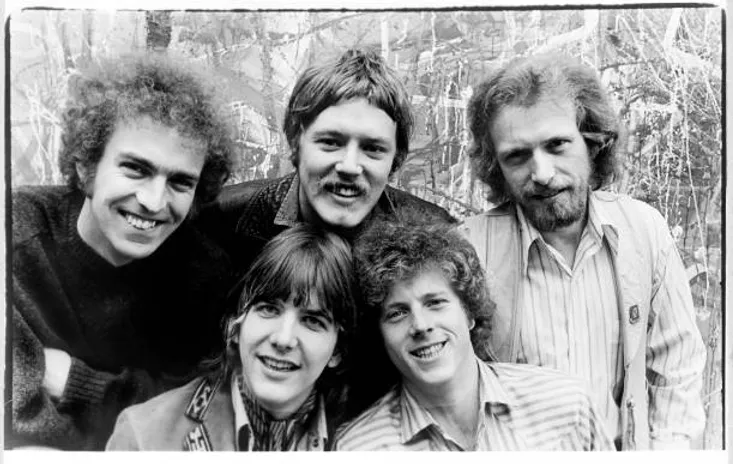
In the crazy world of 1960s America, few bands played a more pivotal and mystifying role than The Flying Burrito Brothers. Formed in Los Angeles in 1968 by former Byrds members Gram Parsons and Chris Hillman, the Burritos were pioneers of country rock, blending the steel guitar twang of traditional country with the soul and psychedelia of the era’s rock music.
Their legacy is as much about what they sounded like as what they represented: a group of long-haired urban cowboys reimagining what country music could be. At a time when country was viewed as the soundtrack of conservative, rural America, the Flying Burrito Brothers flipped the script—fusing Bakersfield twang with cosmic vibes, challenging gender norms, and poking holes in the idea of “authentic” country identity.
The Story of the Flying Burritos
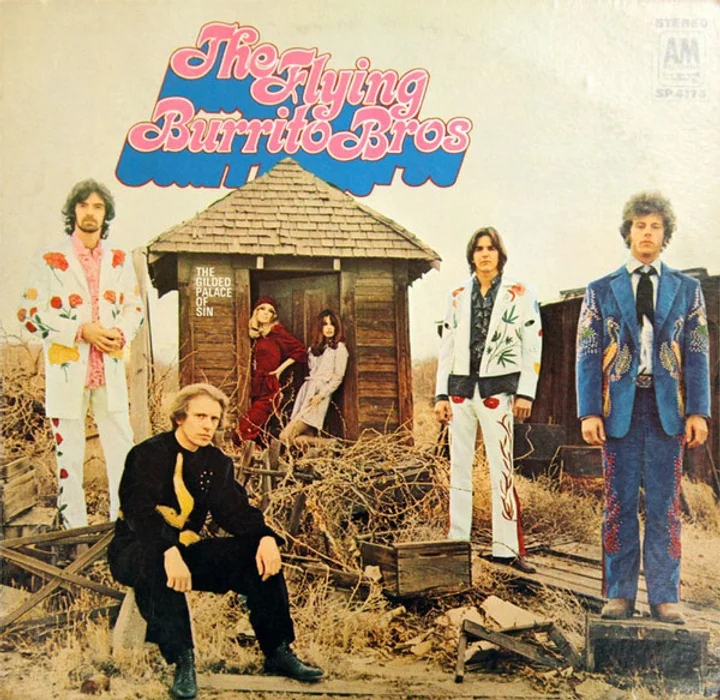
So what happens when a trust-fund Southern boy obsessed with Merle Haggard crashes into a jaded folk rocker from California? You get a band that doesn’t fit in anywhere, let alone in the neatness of the music industry.
The Flying Burrito Brothers were born out of a creative and ideological split within The Byrds, a band already in transition. Gram Parsons, a Southern aristocrat turned musical visionary, had joined the Byrds in 1968 and was instrumental in the making of their country-rock classic Sweetheart of the Rodeo. But Parsons’ devotion to country authenticity clashed with the band’s rock ambitions. After a short tenure, he and Chris Hillman departed to pursue a more focused vision.
They recruited pedal steel guitarist “Sneaky” Pete Kleinow, bassist Chris Ethridge, and drummer Michael Clarke to form the original lineup. Their debut album, The Gilded Palace of Sin (1969), fused honky-tonk traditions with psychedelic aesthetics and gospel-soul influences. While not a commercial hit, it became a cult classic, praised for its innovation and emotional depth.
Their music struck a strange yet captivating balance: classic country instrumentation alongside lyrics that spoke to a disillusioned generation. Tracks like “Sin City” offered apocalyptic visions with Biblical imagery, while “Hot Burrito #1” blended R&B stylings with raw emotional vulnerability. Their second album, Burrito Deluxe (1970), though less well-received, continued this trajectory before Parsons left the group, eventually dying of a drug overdose in 1973.
Country Music Identity in the Late 1960s
To understand the Burritos’ significance, we must consider the sound characteristics and identity of country music in the late 1960s. Traditional country was increasingly divided between the polished Nashville Sound and the grittier Bakersfield Sound. The Nashville establishment favored smooth production, lush string arrangements, and commercially friendly songwriting that spoke to white middle-class respectability.
In contrast, the Burritos adopted a raw, looser sound. Pedal steel guitar was central to their instrumentation, but so were elements of rock and soul. Gram Parsons’ term “Cosmic American Music” reflected this cross-pollination. Their rhythms were unrefined, even lazy by mainstream standards, but emotionally charged. Their lyrics delved into heartbreak, spiritual searching, and cultural dislocation, reflecting both country’s themes and the disillusionment of the counterculture.
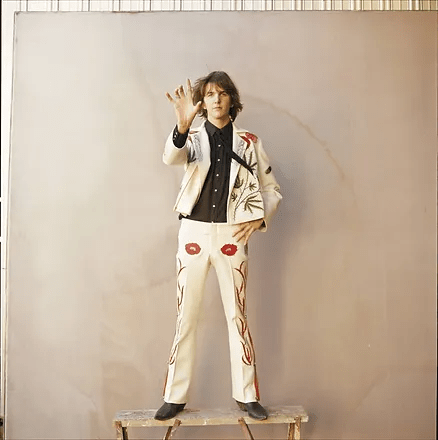
Performance-wise, the Burritos used country’s visual aesthetics against themselves. Parsons’ infamous Nudie suit, adorned with marijuana leaves, pills, flames, and naked women, was both homage and subversion an embrace of tradition infused with psychedelic rebellion. This deliberate tension in both sound and image placed the Burritos in a liminal space, both within and outside the country genre.
Social and Political Context: America in Transition
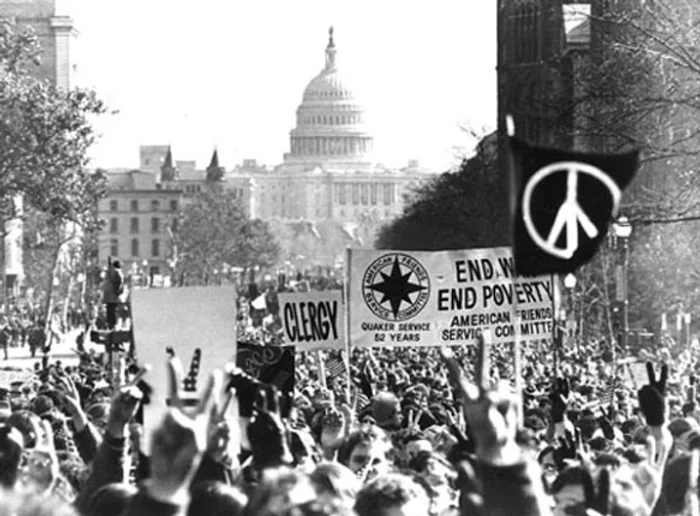
Now, you can’t talk about The Burritos without talking about the chaos swirling around them. The late 1960s was a time of radical change. The Civil Rights Movement, Vietnam War, counterculture, and second-wave feminism reshaped American society. In this era, country music largely represented traditional values, rural life, and conservative politics. The Flying Burrito Brothers, however, represented a break from that narrative.
Their music reflected the era’s political uncertainty and spiritual searching. “Sin City,” for instance, was a commentary on moral and political decay, targeting religious hypocrisy and capitalist greed. This was a country gospel song recast as a countercultural lament.
By covering songs like Aretha Franklin’s “Do Right Woman,” the Burritos acknowledged the influence of Black music on country, an influence often erased in Nashville. This effort to reconnect country with its racially diverse roots was both radical and problematic. While well-intentioned, the band’s efforts also risked appropriation. Parsons’ privileged background as a wealthy white Southerner raises questions about how race, power, and access shaped the musical landscape.
Still, the Burritos helped expose the artificial racial boundaries imposed by the music industry. Their blending of country, R&B, and gospel was not a novelty, but a return to the genre’s true, hybrid origins.
Gender, Masculinity, and Emotional Honesty
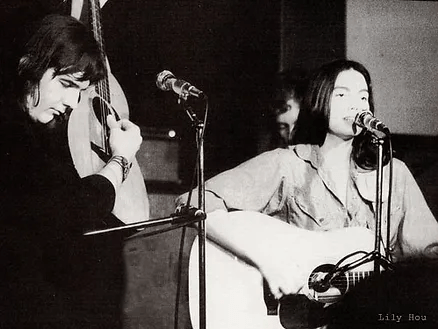
Country music in the 1960s often upheld traditional gender roles and ideals of masculinity: stoicism, strength, control. The Burritos offered something different. Gram Parsons, in particular, expressed emotional vulnerability rarely seen in male country artists of the time. In “Hot Burrito #1,” his pleading, aching vocals admit betrayal and heartbreak in a tone closer to Otis Redding than Hank Williams.
This reflected the broader crisis of masculinity in the era. With the rise of feminism, changing economic roles, and the decline of traditional family structures, American men were being forced to re-examine their identities. Parsons’ soft, introspective masculinity was radical in this context. His flamboyant style from sequins to vulnerability offered a contrast to the rugged individualism of outlaw country or the conservative father figures of Nashville.
Moreover, by singing emotionally expressive songs in a traditionally masculine genre, the Burritos opened space for future male artists to explore tenderness, doubt, and nonconformity. In this sense, they helped redefine what it meant to be a man in country music.
Race and Genre Boundaries
The Flying Burrito Brothers were part of a growing movement to blur racialized genre lines. Country music, though coded white, shared deep roots with Black musical traditions. The Burritos made this link explicit by incorporating soul and gospel influences and by covering Black artists like Aretha Franklin.
Their efforts paralleled a broader artistic push to reconnect country with its blues and gospel origins. Artists like Ray Charles had already challenged these divisions with albums like Modern Sounds in Country and Western Music. The Burritos joined that tradition, albeit with a rock-inflected sensibility.
However, their ability to do this was tied to their whiteness. They had access to mainstream stages and media attention that Black country artists often lacked. Their work highlights the structural inequities within the industry even as it attempts to bridge those divides. Still, their fusion of styles helped pave the way for a more inclusive understanding of country music’s roots and possibilities.
Music Industry and Legacy
The Flying Burrito Brothers were critically acclaimed but commercially unsuccessful. Their refusal to conform to radio-friendly formulas or Nashville conventions meant they were sidelined in the mainstream country world. Yet their legacy is immense.
Gram Parsons’ vision of Cosmic American Music influenced generations of artists. Emmylou Harris, who worked with Parsons shortly before his death, became a major figure in country and Americana. The Eagles adopted the Burritos’ fusion of country and rock, achieving massive commercial success. Later alt-country acts like Uncle Tupelo, Wilco, and Lucinda Williams cited the Burritos as foundational.
Their impact extended beyond sound. They redefined what country music could look like, who it could speak for, and what it could feel like. They brought country to the long-haired rock crowd and made it cool to wear rhinestones and sing about feelings. In doing so, they cracked open the genre for all that would follow.
Conclusion: A Cosmic Legacy
The Flying Burrito Brothers were more than a band, they were a cultural moment. They embodied the friction between tradition and rebellion, rural pasts and urban presents, masculine norms and emotional vulnerability. In the process, they created a new space for country music: one that was inclusive, imaginative, and defiantly sincere.
They were about asking, “What if country music had room for more?” More emotion, more diversity, more experimentation. They were outsiders who didn’t want to burn down the barn, they just wanted to open the doors a little wider. Their legacy isn’t written in gold records, but in its influence. In every indie artist who brings a little twang to their tune, in every rhinestone suit on a festival stage, in every tear-soaked lyric that dares to be soft and strong at the same time.
The Flying Burrito Brothers were the ones who weren’t afraid to get weird, get sad, and get country on their own terms. As artists today continue to blend country with hip-hop, soul, pop, and punk, we can trace a line back to the Burritos. They showed that country wasn’t a closed door, but a wide-open road.
Bibliography:
UNITED STATES – JANUARY 01: USA Photo of Pete KLEINOW and Chris HILLMAN and Bernie LEADON and FLYING BURRITO BROTHERS and Gram PARSONS and Michael CLARKE, L to R: (back) Bernie Leadon, Michael Clarke, Sneaky Pete Kleinow; (front) Gram Parsons, Chris Hillman (Photo by Jim McCrary/Redferns)
“The Flying Burrito Bros – The Gilded Palace of Sin | Releases | Discogs.” Discogs, www.discogs.com/master/12299-The-Flying-Burrito-Bros-The-Gilded-Palace-Of-Sin.
East, Elyssa. “Nudie and the Cosmic American.” Oxford American, 7 Jan. 2016, oxfordamerican.org/magazine/issue-91-winter-2015/nudie-and-the-cosmic-american.
“The Vietnam Conflict: The Rock ‘n’ Roll War.” Paola Sarappa | Blog, 18 Dec. 2016, paolasarappa.wordpress.com/2011/08/18/the-vietnam-conflict-the-rock-%E2%80%98n%E2%80%99-roll-war/.
“When Gram Met Emmylou on M St.” The Georgetown Metropolitan, 5 Sept. 2023, georgetownmetropolitan.com/2023/09/06/when-gram-met-emmylou-on-m-st/.



 MUS 112